
%402x.svg)

%402x.svg)
%402x.svg)
TL;DR
The affluent guest is not afraid of the woo. She is afraid of paying a premium for something that cannot articulate its own value.
The founders filling high-end wellness properties with exactly the right guests have figured out how to hold both things at once: elevated hospitality and deep healing work, without letting either one apologize for the other.
Luxury and spirituality are not opposites. Treating them like they are is the first mistake.
The woo does not need to be hidden. It needs to be translated. There is a version of every spiritual concept that lands for the discerning guest without losing any of its depth.
Affluent guests are buying trust before they are buying anything else. When the brand language, the visual identity, and the healing modalities do not speak the same language, she feels it. And she does not book.
Your brand is the first experience the guest has of the property. If it is not communicating at the level of the experience, the wrong guests are booking and the right ones are scrolling past.
What follows is the brand conversation most wellness property founders are not having until it is already costing them. Read the full article.
High-End Hospitality, High-Frequency Healing: The Brand Language of Luxury Wellness
The market for high-end wellness properties is growing faster than almost any other segment in experiential travel and wellbeing. The guest is more financially empowered, more experienced, and more discerning than she has ever been. And the gap between what most wellness property brands are communicating and what that guest actually needs to feel before she books has never been wider.
Most founders do not realize this gap exists until it is already costing them. They have built something extraordinary, designed an experience that holds both the depth of genuine healing work and the standard of true luxury hospitality, and they are watching the wrong guests book while the right ones scroll past. The brand is the reason. And the brand is fixable.
This post is about exactly how.
The Market Nobody Told You Would Be This Complicated
Opening a high-end wellness property is one of the most layered brand challenges in the hospitality industry right now. Not because the market is too small, and not because the demand is not there. The challenge is that this particular guest is sophisticated in two directions simultaneously, and most wellness property brands are only speaking to one of them.
She knows luxury. She has stayed in exceptional properties, eaten at extraordinary restaurants, and had enough high-end experiences to know immediately when a brand is performing quality rather than delivering it. And she knows wellness. She has done the inner work, explored the modalities, sat in ceremony, worked with facilitators, and developed a refined enough sense of her own healing path that surface-level spiritual aesthetics do not move her.
Most founders opening high-end wellness properties make one of two mistakes. The first is leaning so far into the luxury hospitality register that the brand starts to sound like a five-star hotel with a yoga studio. Beautiful, aspirational, and completely devoid of the depth that makes healing work worth paying for. The second is leaning so far into the spiritual register that the brand becomes inaccessible to the guest who is approaching from the luxury hospitality side, heavy with insider language that signals community for the already-converted but creates confusion for everyone else.
The founders building properties that work, that attract the right guests at the right investment level and deliver experiences those guests talk about for years, are the ones who have found the third way. The brand language that holds luxury and healing in the same hand, fluently and without apology, and communicates both to a guest who is looking for exactly that combination.
Why the Affluent Guest Is Not Who You Think She Is
The most common misunderstanding founders bring to this conversation is the assumption that the affluent guest needs the spiritual components of the experience softened or made more palatable for her. She does not. And building a brand around that assumption is one of the most expensive mistakes a wellness property can make.
The woman booking a high-end wellness experience is not doing it because she wants a luxurious holiday with some light meditation on the side. If that were what she wanted, she would book a luxury resort. She is specifically seeking a property that offers something the five-star hotel cannot: genuine transformation, held inside an environment that matches the level she operates at in every other area of her life.
She wants the thread count and the plant medicine. The exceptional cuisine and the breathwork that undoes something she has been carrying for a decade. The private villa and the facilitated integration that helps her understand what just happened and what to do with it. She is not asking the brand to choose between the earthly and the elevated. She is asking it to hold both, skillfully and without apology, because that is precisely the combination she cannot find anywhere else and is willing to pay significantly to access.
I know what you are thinking. And I know your current brand language is probably doing one of two things: either it is leading so heavily with the hospitality elements that the depth of the healing work gets buried in the amenities section, or it is leading so heavily with the spiritual language that the luxury guest approaching from the travel and hospitality side cannot find her footing in it.
Both of those are solvable. But they require understanding exactly what the brand needs to communicate and in what order, and that begins with understanding the specific trust journey this particular guest moves through before she books.

The Trust Journey of the High-Investment Wellness Guest
The affluent guest considering a high-end wellness property does not move through a typical hospitality booking journey. She is not comparison shopping on a travel platform and making a decision based on star ratings and price per night. She is moving through a much more nuanced trust-building process, and the brand language has to meet her at every stage of it.
The first question she is asking is whether the brand understands her.
Not her demographics. Her actual inner experience. What she has tried before and why it was not enough. What she is carrying that she has not been able to put down despite years of doing the work. What she is quietly hoping a property like this might offer that she has not found anywhere else. The brand language that answers this question, that makes her feel seen before she has spoken to anyone, is the brand language that earns the next step.
The second question she is asking is whether the property can be trusted with the depth of the work.
This is where the spiritual credibility of the brand becomes critical. She is not going to hand over a significant financial investment and several days of her life to a property whose brand communicates that it is doing spa treatments with a sound bath added. She needs to feel that the people holding the space understand the nature of transformational work, have done their own, and have built an environment specifically designed to support the kind of depth she is looking for.
The third question she is asking is whether the standard of the physical experience matches the standard of the healing work.
For this guest, being asked to do profound inner work in an environment that does not match the level of care she applies to every other area of her life creates a friction that undermines the work itself. The luxury of the physical environment is not indulgence for its own sake. It is the container that makes the depth of the healing feel safe, supported, and worth fully surrendering to.
The fourth question she is asking is whether she will belong in the room.
High-end wellness guests are often making a significant leap of faith in booking an experience like this. They want to know who else will be there, not in a status-conscious way, but in a depth-of-readiness way. The brand language that communicates clearly who the property is designed for, and what the community of guests it attracts looks like, is the brand language that removes the final layer of hesitation before she books.
Translating the Woo Without Losing It
This is the section most founders need most, and the one that is hardest to find genuinely useful guidance on. Because the answer is not to remove the spiritual language from the brand. It is to find the version of it that lands for a guest who is sophisticated and discerning and possibly approaching from a hospitality background rather than a deep wellness background.
The goal is not sanitization. It is translation. And the distinction between those two things is everything.
Sanitization removes the depth in an attempt to make the brand more broadly palatable. Translation finds the precise language that communicates the same depth in a way that does not require insider knowledge to receive. One produces a brand that has lost its soul. The other produces a brand that is doing the rare and extraordinarily valuable thing of making the soul of the work legible to a wider audience without diminishing it.
What translation looks like in practice:
Rather than "plant medicine ceremony," a translated version might be "guided ceremonial experiences working with traditional plant medicines in a carefully prepared, professionally supported setting." The depth is intact. The guest who has no prior experience with plant medicine can understand what she is being offered and make an informed decision about whether it is right for her. The guest who has extensive experience knows immediately that the property understands the work.
Rather than "nervous system regulation," a translated version might be "somatic practices designed to bring the body out of the chronic stress state that high-performance living produces, and into the kind of deep rest where real integration becomes possible." The concept is fully preserved. The language is accessible to the guest who has never encountered somatic work before.
Rather than "energetic clearing," a translated version might be "practices that address the accumulated weight of what we carry in the body, not just cognitively but at the level of the tissues, the breath, and the biofield." This is not vague. It is specific in a way that opens the door rather than closing it, and the guest who knows exactly what energetic clearing is will recognize that the brand knows it too.
I know your first instinct might be that this translation dilutes the work. If I explain it too much, it loses its power. The people who need to understand will understand. And there is real wisdom in that instinct when it comes to the work itself. But the brand is not the work. The brand is the bridge between the work and the guest who has not yet experienced it. And a bridge that only the already-converted can cross is leaving an entire category of exactly the right guests on the other side.

The Language of Elevated Restraint
One of the most distinctive qualities of the brand language used by the highest-end wellness properties is what it does not say. Luxury at this level communicates as much through restraint as through description, and understanding how to deploy that restraint in the copy is one of the most powerful tools a wellness property founder can develop.
The affluent guest is a sophisticated reader. She has encountered enough marketing in her lifetime to have developed a finely tuned sensitivity to language that is trying too hard. Superlatives, excessive adjectives, and copy that strains toward impressiveness all register to her as signals of insecurity rather than quality. The brand that does not need to tell her it is extraordinary, because every element of the communication demonstrates it, is the brand that earns her trust.
Elevated restraint sounds like:
Describing one thing with complete precision rather than listing seven things with moderate accuracy. The property that tells her exactly what the morning practice looks like, what it is designed to do for the body, and why it is positioned at that particular time of day is communicating more about the quality of the experience than the property that lists eight modalities available during the stay.
Letting the guest's transformation be the subject of the sentence rather than the property's offerings. Not "we offer a curated program of healing modalities" but "you will leave having done something your body has been asking for longer than you have been listening."
Trusting the guest to receive a statement without over-explaining it. The brand that makes a confident, declarative claim about the nature of the experience and then moves on is communicating the same quiet authority as the expert who does not need to justify every statement she makes.
Knowing what to leave out of the copy entirely. Not every modality needs to be on the website. Not every amenity needs to be listed. The editing of the brand language is as important as the writing of it, and the properties operating at the highest level understand that a page that tries to include everything ends up communicating nothing with particular power.
What the Visual Identity Has to Do With All of This
The brand language cannot do its work in isolation. The visual identity is the first experience the guest has of the property, and it is forming an impression that the copy will either confirm or contradict. For a high-end wellness property trying to hold both the luxury hospitality register and the healing depth register, the visual identity has an exceptionally demanding job.
It has to communicate elevated without communicating cold. Grounded without communicating rustic in a way that undermines the luxury positioning. Spiritual without communicating amateur. Natural without communicating unpolished. Every visual choice, from the typography to the color palette to the photography direction to the layout of the website, is communicating something about the nature of the experience before the guest has read a word.
And the most common failure point is inconsistency. The property that has stunning architectural photography paired with a font that reads as generic wellness, or a deeply considered color palette undermined by stock imagery that could belong to any spa in the world, is communicating a disconnect that the sophisticated guest feels immediately. She cannot always name what feels off. But she feels it, and it creates just enough friction that she keeps looking.
The visual identity of a high-end wellness property has to be as considered, as specific, and as intentional as the healing program itself. Every element chosen on purpose. Every choice in service of the same feeling: that this property was built by people who understand both dimensions of what she is looking for, and who have applied that understanding to every detail of how the brand presents itself in the world.
This is the work the Abundance Package was built for. The complete brand transformation for the wellness property founder who has built something extraordinary and needs a visual identity that communicates that before the first word is read. A cohesive, strategically created brand that holds the luxury and the depth simultaneously, in a way that makes the right guest feel she has finally found exactly what she has been looking for. Learn more about the Abundance Package here.

The Copy Patterns That Are Costing You the Right Guests
There are specific language patterns that appear consistently across wellness property websites that are actively working against the positioning, and that founders often cannot see because they are too close to the brand to read it the way the guest does.
Leading with the amenities before earning the right to.
The guest choosing between high-end wellness properties is not making her decision based on the thread count or the infinity pool, although those things matter. She is making it based on whether the property understands what she is there to do. A website that leads with the physical environment before establishing the depth of the healing work is communicating its priorities in a way that attracts the luxury traveler and loses the transformational seeker. The amenities belong in the brand. They just do not belong at the front of the story.
Using wellness industry language as a shortcut for specificity.
Words like "holistic," "integrative," "conscious," and "intentional" have become filler in wellness copy. They are used in place of specific descriptions of what the property actually offers and what it actually produces. The guest who has been in the wellness world for any length of time reads past them automatically. They register as placeholders rather than as meaningful communication about the nature of the experience.
Describing the modalities instead of the transformation.
The list of offerings, sound healing, breathwork, somatic therapy, cold exposure, plant medicine, is not the sell. The transformation those modalities are designed to produce, described specifically and in the guest's language, is the sell. The property that leads with the modality list and buries the transformation is making the guest do the work of connecting those dots herself. The right brand language makes that connection for her before she has to ask.
Photographing the property instead of the feeling.
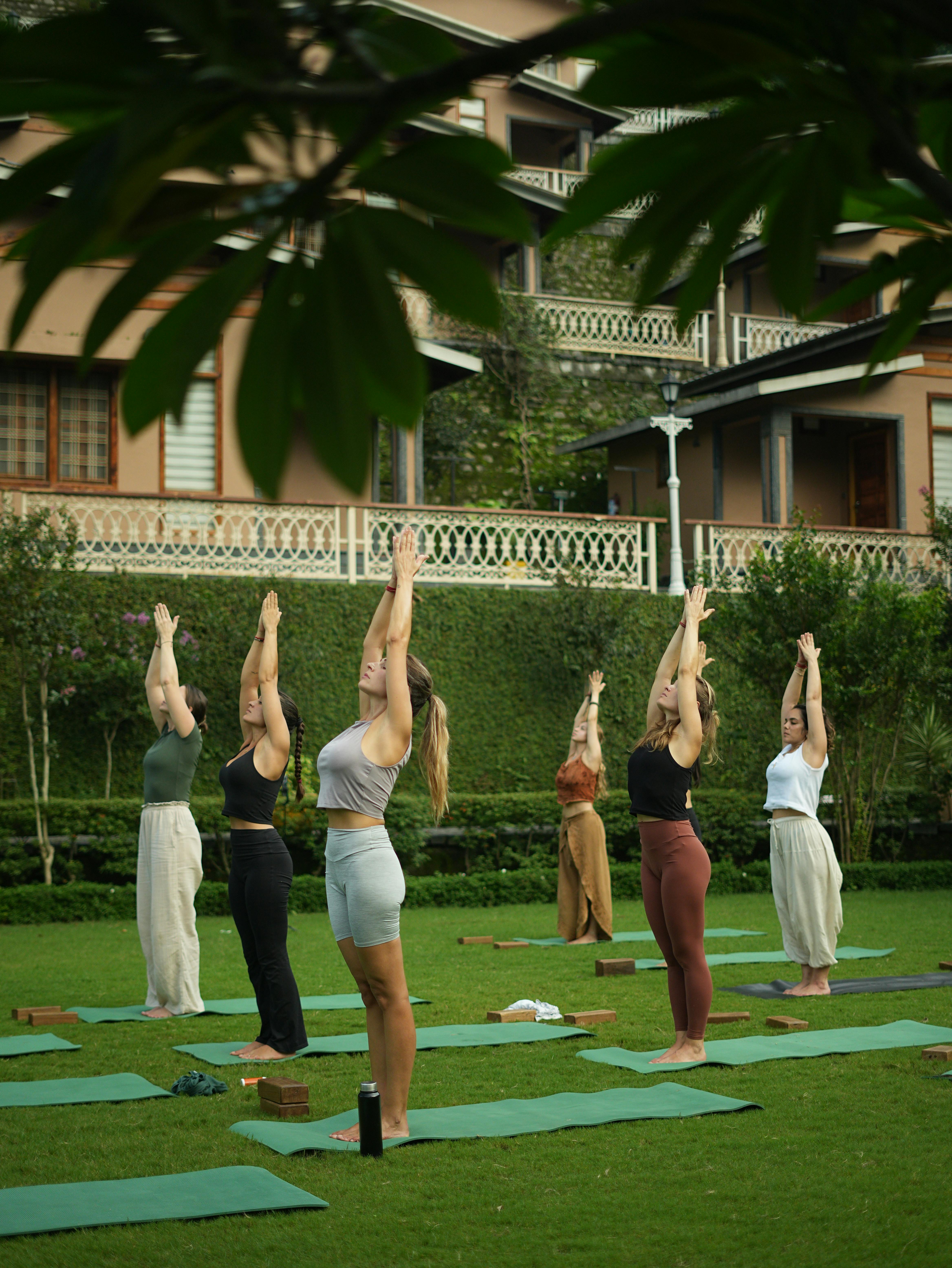
The images that convert for high-end wellness properties are not the ones that show the most impressive architecture or the most beautiful pool. They are the ones that make the guest feel something. The quality of the light. The expression on a face mid-practice. The stillness of an empty space that she can imagine herself inside. The photography should make her feel the property before she arrives, not just admire it from a distance.
Building the Brand That Holds Both
Everything in this post has been moving toward one question. How does a founder actually build a brand that holds the luxury and the healing at the same level, consistently, across every touchpoint, without letting either one collapse into the other?
The answer begins with clarity about what the property is fundamentally offering and who it is fundamentally for. Not the demographic answer. The experiential answer. What does the guest arrive carrying and what does she leave having done? What is the specific combination of physical luxury and healing depth that this property offers in a way no other property does? What is the feeling, described as precisely as possible, of being inside the experience?
When those questions are answered with genuine specificity, the brand language follows from them. The copy writes itself in the sense that it is simply describing, with precision and confidence, something that is already real. The visual identity follows from the same clarity. And the guest who is looking for exactly this combination finds the brand and immediately knows she has found it.
The founders who struggle with this are almost always the ones who have not yet done this foundational clarity work at the brand level, not because the vision is not there but because there has not been a structured process for translating the vision into the specific, consistent language and visual choices that communicate it to a guest who has never been to the property.
If you are in that place right now, if the experience you are building is clearer to you than the brand language that is supposed to communicate it, that is exactly what Office Hours is designed to address. A focused strategy session where we can look at where the brand is currently landing, where the gap is between that and where it needs to be, and what specifically needs to change before the property opens or relaunches. Book your session here.
The Property You Built Deserves to Be Found
The affluent guest who is ready for exactly what you are offering is not going to wait forever. She is going to find a property whose brand makes her feel, before she has spoken to anyone, that this was built for her. And she is going to book it.
The question is whether that property is yours.
You have done the harder work already. You have built the vision, designed the experience, sourced the facilitators, and created something that holds both the luxury and the depth in the same hand. The brand is simply how the right guest finds her way to it. And when the brand is working at the level the property deserves, she does not have to look very hard.
Frequently Asked Questions
How do I market a luxury wellness retreat without alienating spiritual guests?
Lead with the transformation rather than the amenities. Spiritual guests are not put off by luxury. They are put off by brands that use luxury as a substitute for depth. When the brand language communicates both the quality of the physical environment and the seriousness of the healing work, with equal specificity and confidence, neither audience feels alienated.
What is the difference between luxury wellness branding and regular wellness branding?
The difference is primarily in the standard of specificity and the confidence of the positioning. Luxury wellness branding does not rely on broad spiritual language or generic hospitality copy. Every element of it is chosen with precision, in service of a guest who is sophisticated in both directions and will immediately feel the difference between a brand that is performing quality and one that is delivering it.
How do I talk about spiritual or alternative healing modalities without losing high-end guests?
Through translation rather than sanitization. Every spiritual concept has a version of itself that is accessible to the uninitiated without losing any of its depth. The goal is not to remove the language that signals credibility to the deeply experienced guest. It is to find the framing that opens the door for the guest who is approaching from the luxury hospitality side, so that both can find their footing in the brand.
How important is visual branding for a high-end wellness property?
It is doing more work than most founders realize. The visual identity is the first experience the guest has of the property, and for a high-investment experience, it is forming an impression that the copy will either confirm or contradict. A visual brand that does not communicate at the level of the experience is losing the right guests before the copy gets a chance to make its case.
What makes a wellness property feel truly luxurious in its branding?
Cohesion, specificity, and restraint. Every element of the brand communicating the same thing. Language and visuals chosen with enough precision to be ownable rather than generic. And the confidence to leave things out, to trust the guest to receive a statement without over-explanation, and to let the quality of the communication itself signal the quality of the experience.
How do I attract affluent guests who have never done deep healing work before?
By leading with the feeling of the experience rather than the mechanics of it. The guest who is new to deep healing work but ready for it does not need to understand the modality before she books. She needs to feel the transformation it is designed to produce, described in language specific enough that she can imagine herself inside it. When the brand language meets her at the level of her desire rather than at the level of her existing knowledge, she can find her way in.
When should I invest in professional branding for my wellness property?
Before the first guest arrives if at all possible, and certainly before any significant marketing investment is made. The brand is the foundation that every other communication effort is built on. Marketing a property with a brand that does not yet reflect the level of the experience is spending money to send the right guests to the wrong first impression.


%402x%20(dark).svg)
%402x%20(dark).svg)


%402x.svg)